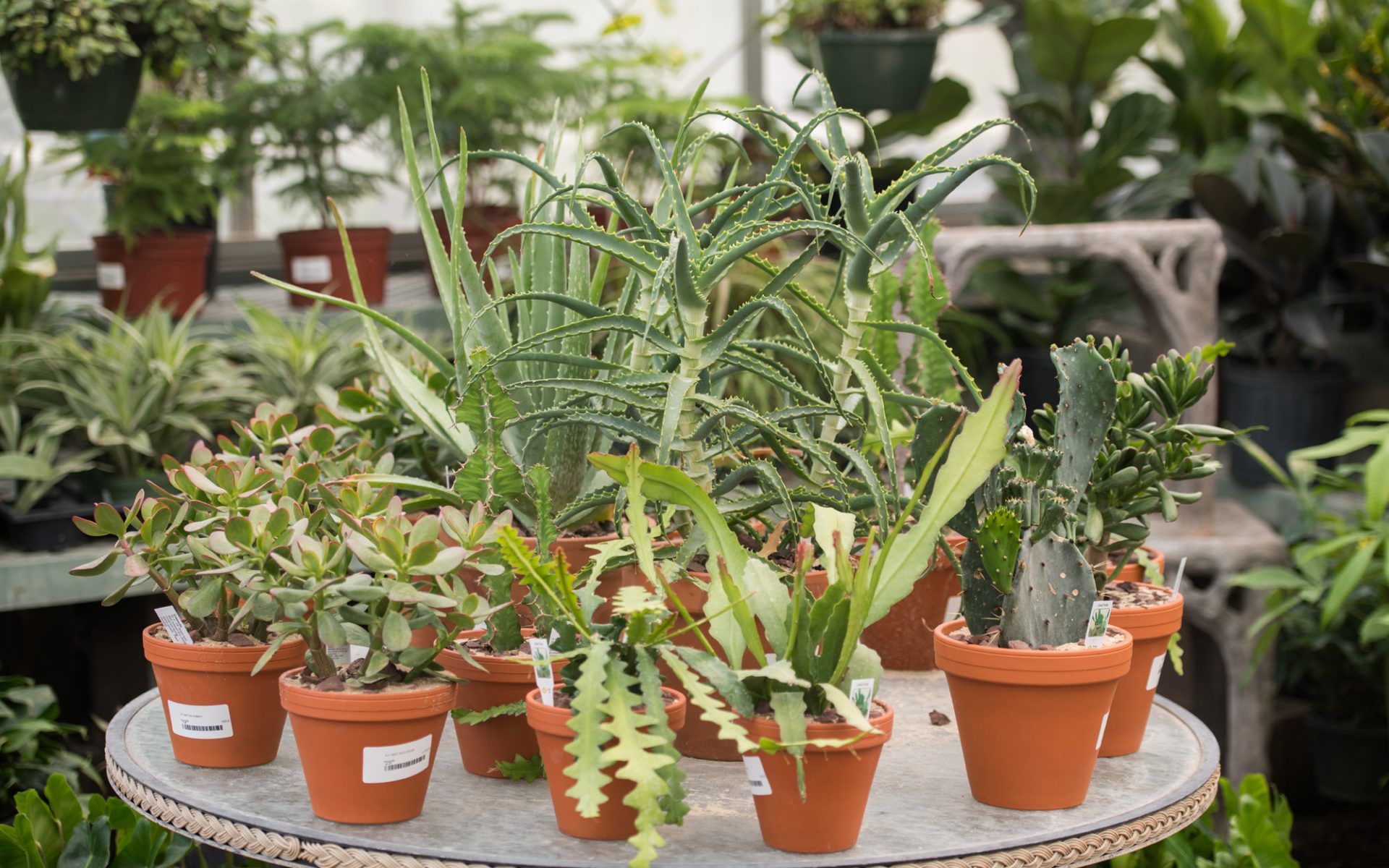
When the temps are chilly and you’re looking for a cozy retreat, swing over to Bountiful Acres and visit our houseplant and tropical greenhouse filled with beautiful plants of all shapes, sizes, and textures. But be warned, you might just fall in love with our pretty cool houseplant selection and want to take a few of these beauties home with you.
Never cared for a houseplant before or don’t feel confident in your plant parenting? No worries! Our team will help you pick out a houseplant (or two) that is the perfect fit for your home and lifestyle, and send you home with all you need to know to grow your skills.
Three popular houseplants with different levels of care:
Sansevieria (Snake Plant)
Care Level: Beginner
We love snake plants for first-time plant owners! These plants don’t require frequent watering and can live under a variety of different light conditions, making them perfect low-maintenance plants. Snake plants can live for years and even help in purifying the air in your home!
Peace Lily
Care Level: Some Experience
If you’re ready for one step-above a snake plant, you’re ready for a Peace Lily! These tropical plants enjoy humid environments, so misting and moderate soil-checking is necessary to avoid wilting leaves. Should you desire your peace lily to flower, make sure it is placed in an area that has access to lots of indirect sunlight.
Fiddle Leaf
Care Level: Experienced
The Fiddle Leaf has become increasingly popular over the years, but not for its ease of care. These plants make lovely additions to homes but can be quite difficult to care for. High humidity and high light are important to the health of these plants, as well as keeping them away from cold air and dusty areas. Just as moving can be difficult for us, it’s difficult for Fiddle Leaf’s as well!
Pro Tip: They do not adjust well to changing environments, so make sure you pick a spot in your home where it has room to grow.
Winter Plant Care Tips
Watch your watering routine.
One of the biggest mistakes plant owners make in winter is overwatering. With lower temperatures and reduced sunlight, most houseplants enter a period of slower growth, meaning they require less water than in the warmer months. Always check the soil before watering—stick your finger about an inch deep. If the soil still feels moist, wait a few more days before watering again. Overwatering can lead to root rot, which is especially dangerous when plants are already stressed by winter conditions.
Cacti and succulents, like Aloe Vera and Jade Plants, need even less water during winter. Water them only when the soil is completely dry. Tropical plants, such as Monsteras and Peace Lilies, may still require regular watering, but always ensure proper drainage to prevent soggy roots.
Check you’re providing adequate light.
With shorter days and lower light intensity, some plants may struggle to get enough sunlight. If you notice your plants becoming leggy or their leaves losing vibrancy, they might not be getting enough light. Move them closer to windows, preferably south- or west-facing, where they can receive the most natural sunlight. Be mindful of cold drafts near windows, as sudden temperature drops can harm delicate plants.
If natural light is insufficient, consider using grow lights. LED grow lights are energy-efficient and provide the right spectrum of light to supplement natural daylight. Plants like Fiddle Leaf Figs, Snake Plants, and Spider Plants will benefit from extra light exposure to maintain their health and growth.
Watch your winter humidity levels.
Indoor heating systems can significantly reduce humidity levels, making the air much drier than what most houseplants prefer. Many popular houseplants, including Calatheas, Boston Ferns, and Orchids, thrive in humid environments and may struggle with dry indoor air.
To boost humidity, you can:
- Place a humidifier near your plants.
- Group plants together to create a microclimate.
- Use pebble trays filled with water beneath plant pots.
- Mist humidity-loving plants regularly (though avoid misting plants prone to fungal issues, like African Violets).
Plants like stable, consistent temperatures.
Fluctuating temperatures from heating vents, radiators, and cold drafts can stress your plants. Most houseplants prefer a consistent temperature range between 65-75°F. Keep plants away from direct heat sources and avoid placing them near drafty windows or doors. If your home tends to get chilly at night, consider moving sensitive plants like Pothos, Rubber Plants, and Dracaenas away from cold windowsills to a more stable location.
Plant leaves need dusting and cleaning, too!
With windows closed more often in winter, dust can accumulate on plant leaves, blocking their ability to photosynthesize effectively. Gently wipe down large-leafed plants like Monsteras, Rubber Plants, and Fiddle Leaf Figs with a damp cloth to keep their leaves clean and efficient at absorbing light. For smaller plants with delicate leaves, a gentle shower with lukewarm water can help remove dust and refresh foliage.
Winter means we reduce fertilizing.
Since most plants experience slower growth in winter, they don’t require as many nutrients. Over-fertilizing during this time can lead to a buildup of salts in the soil, which can harm roots. Pause fertilization or apply a diluted fertilizer sparingly if your plants still show active growth. Once spring arrives, you can resume regular feeding to support new growth.
Keep an eye out for those plant pests.
Winter is a prime time for common houseplant pests like spider mites, mealybugs, and fungus gnats to appear. Dry indoor air can encourage these pests, so keep an eye on your plants for any signs of infestation. Regularly inspect leaves (especially the undersides) and stems. If you notice pests, wipe leaves with a neem oil solution or use insecticidal soap to keep infestations under control.
If you decide to start the year off with a new houseplant, we can’t wait to help you! Be sure to check out our large selection of pottery to find the perfect pot that matches your design style.